Bestseller13th-century styling
LongswordsNew
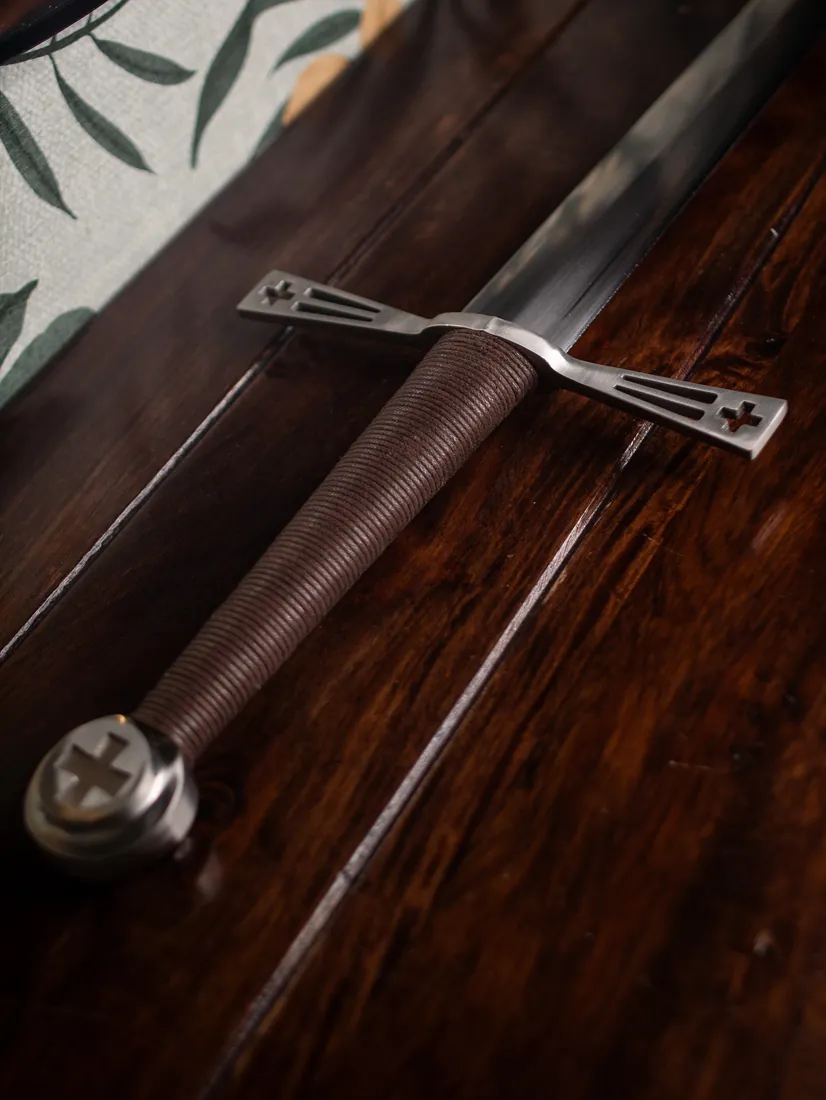
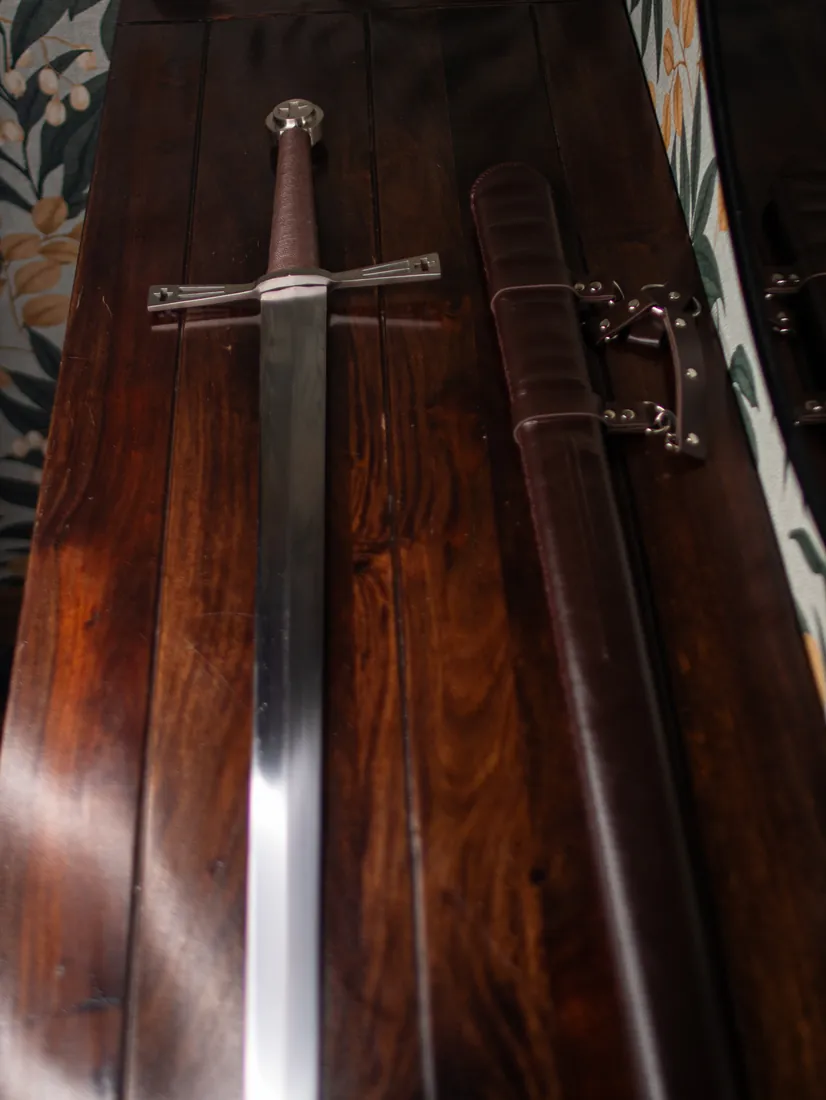
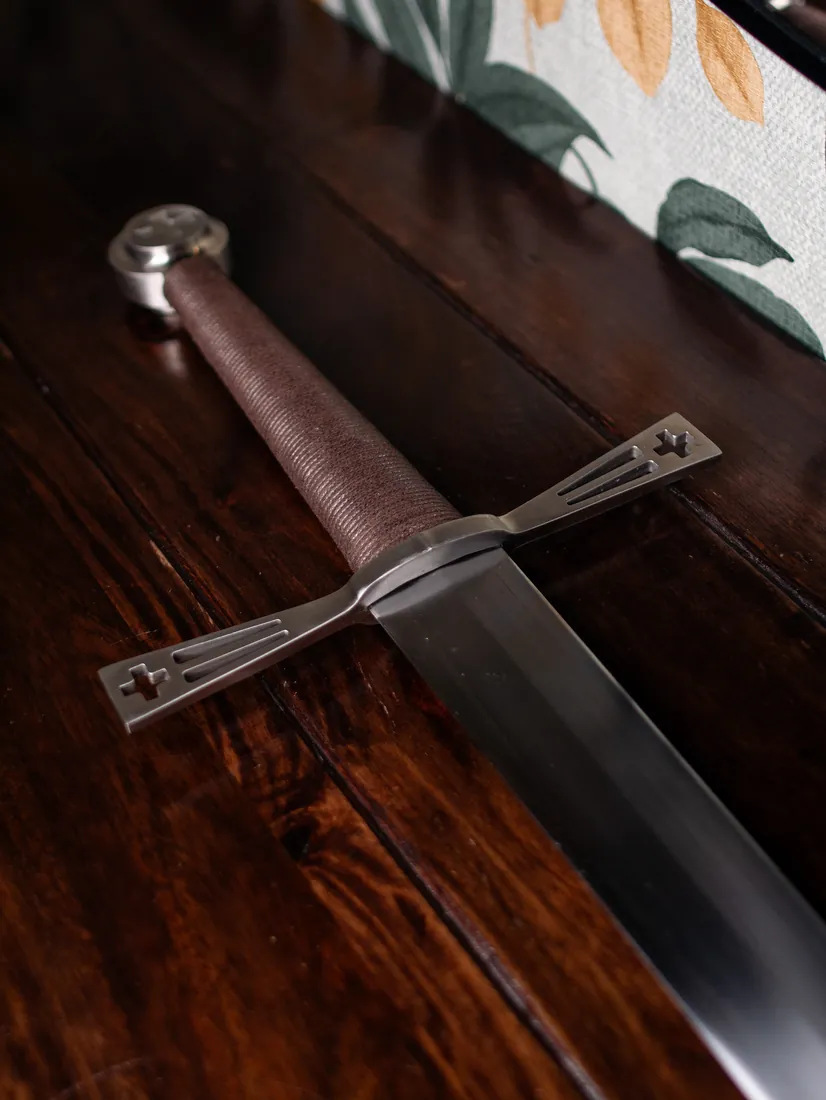
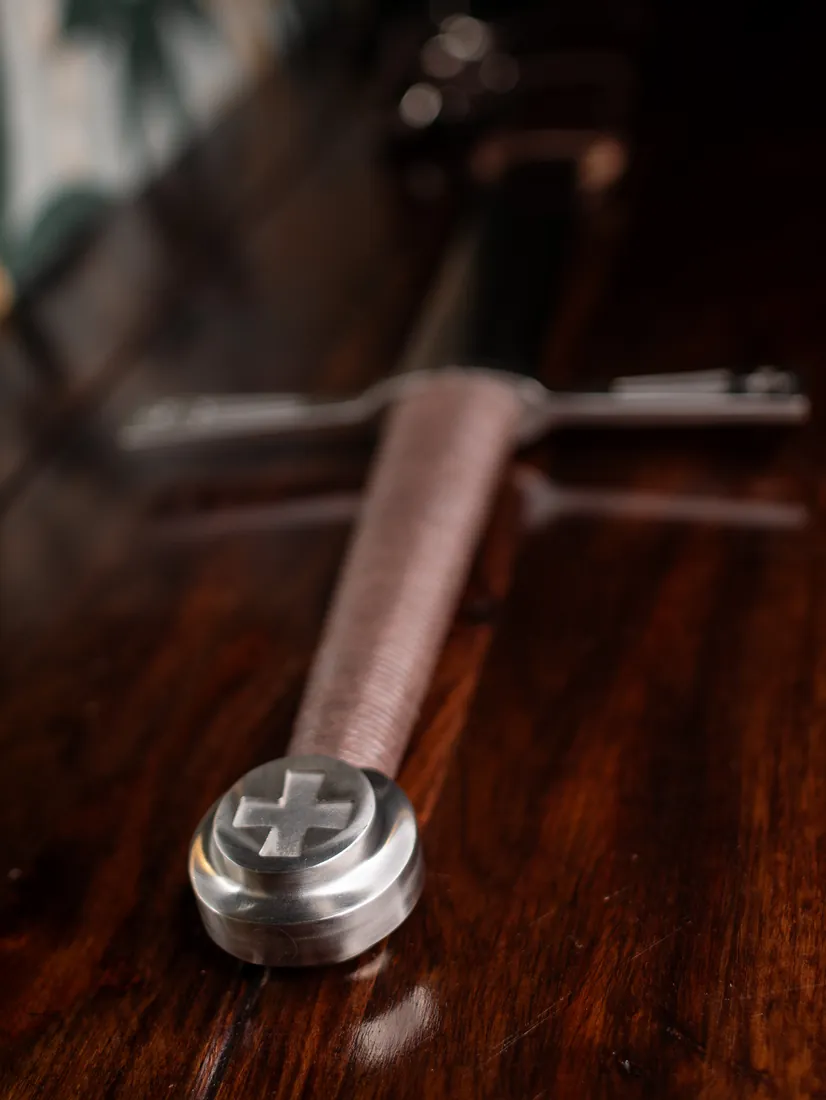
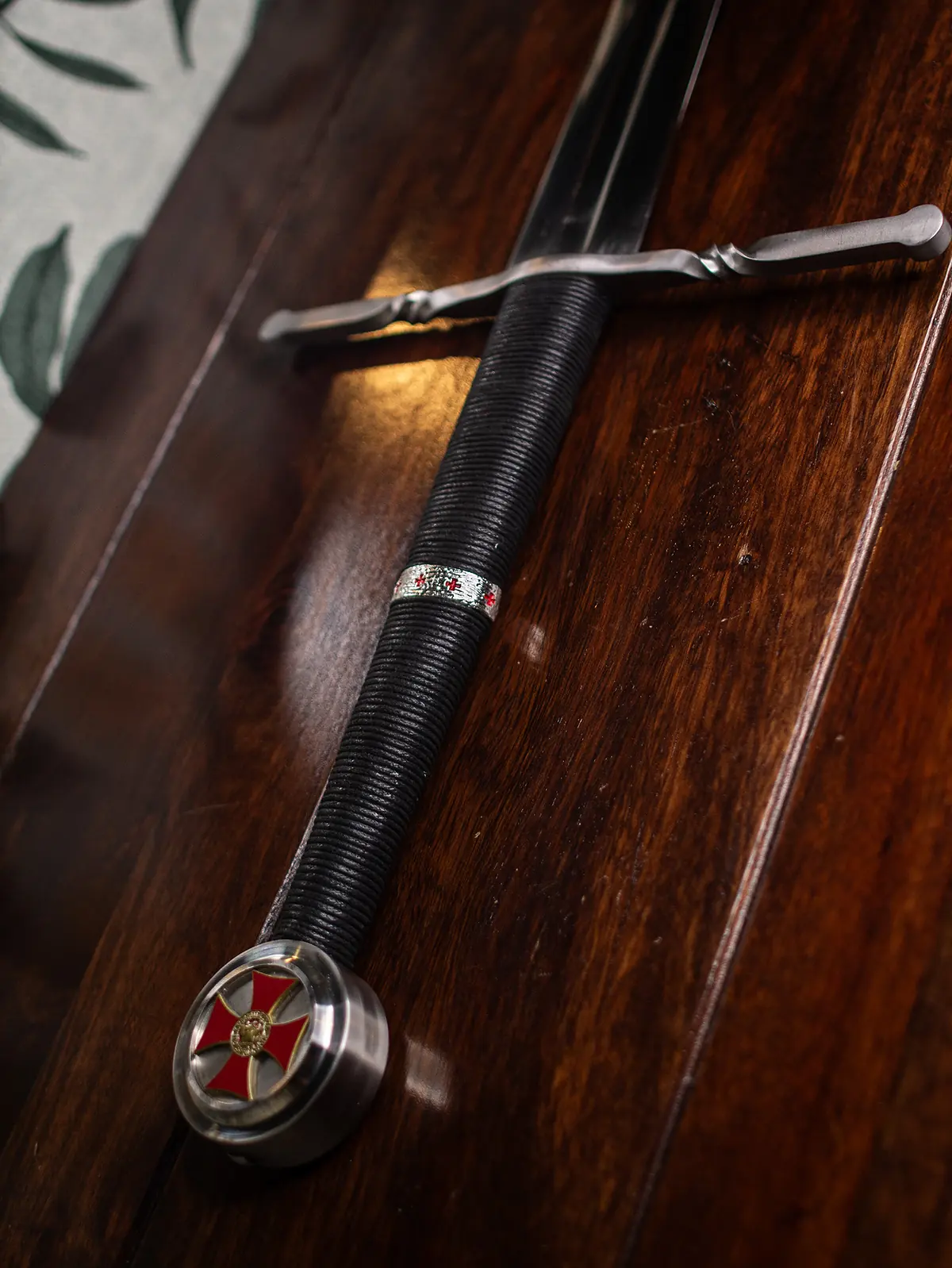
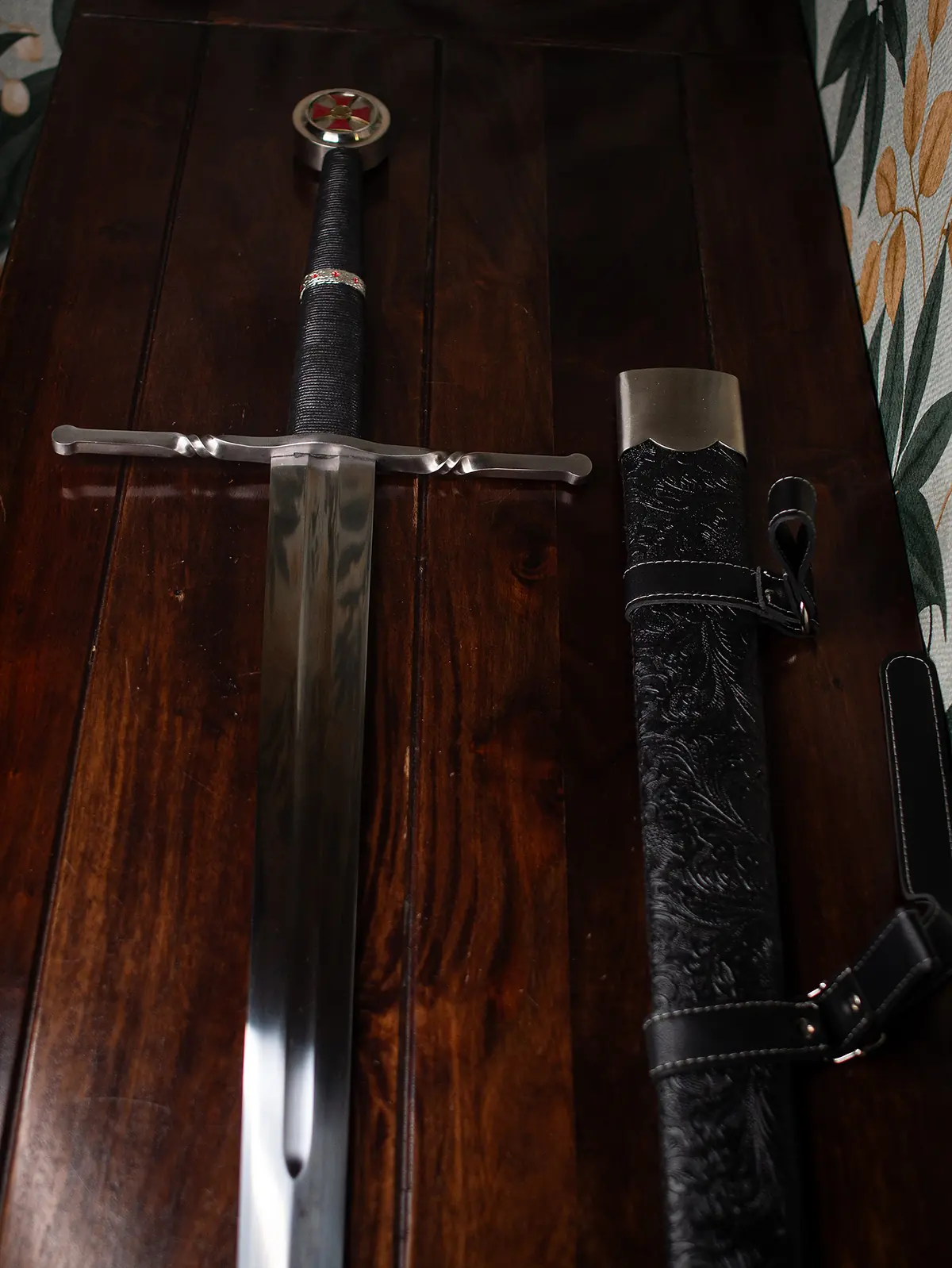
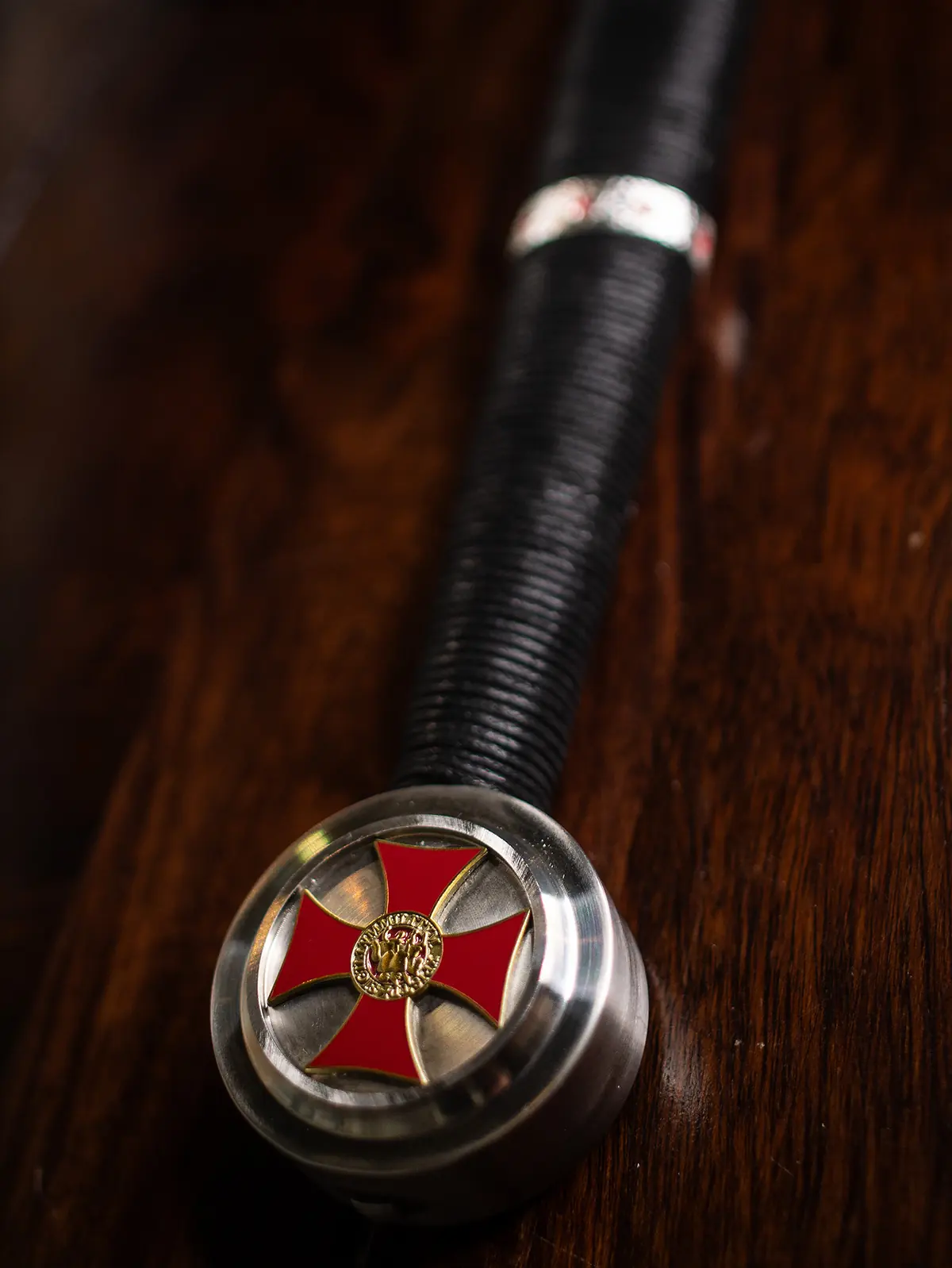
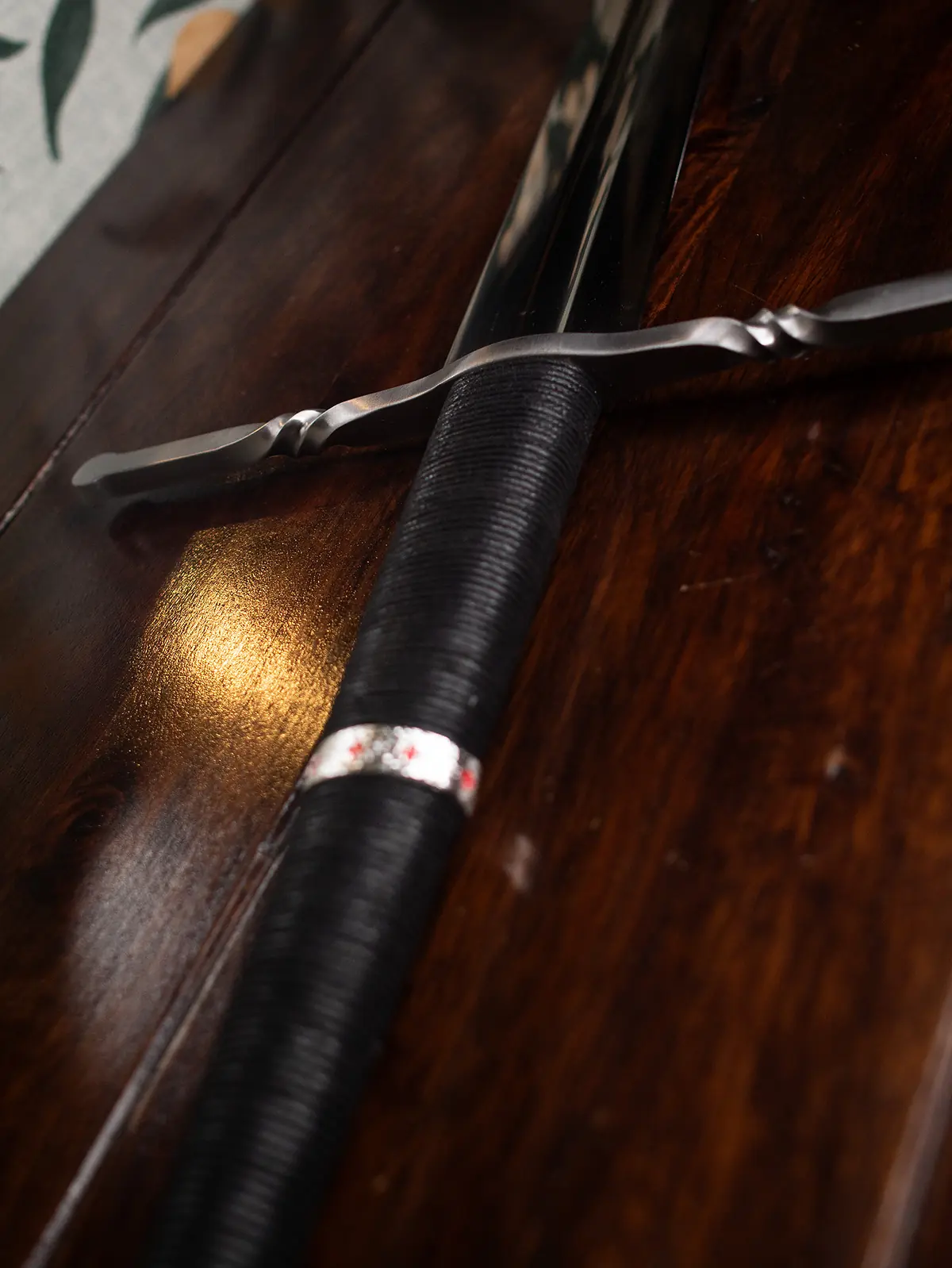
Templar Longsword “Baldwin”
Hand-and-a-half sword, sharp 9260 blade, scabbard included
Length122 cm
Weight1.75 kg
ScabbardIncluded
The head up close: incised motif on the socket and the hole in the blade
The whole axe in hand: 75 cm with its ash haft
The socket’s hood from behind: a lozenge in a cross and fir branches
The bottom end of the haft with a burned pattern
The other face of the head on leather, the haft in folk bands
Hand forged at Hrútr Forge, 50HF steel edge, ash haft
A Slavic axe hand forged by a Polish smith at Hrútr Forge: a head with a hooded socket and a hole in the blade, modelled on a find from Lake Lednica, with a 50HF steel bit forge-welded at the edge, on an ash haft decorated with folk patterns. The only one of its kind.
final price · shipping from PLN 29final price · shipping from €7
Last one in stock
The head of this axe is modelled on a find from Lake Lednica in western Poland. On the island of Ostrów Lednicki stood one of the most important strongholds of the first Piast rulers, linked to the shores by two long wooden bridges. On the lake bed along their remains, underwater archaeologists have found dozens of axes, spearheads and swords from the 10th and 11th centuries — one of the richest collections of early medieval weapons in Poland. This is not a millimetre-perfect copy of a single artefact but an axe forged after that pattern.
The shape is traditionally Slavic. The socket has a hood: its back is drawn out along the haft and wraps around it like a hood. Below the socket the blade has a deep, semicircular cut-out and drops into a beard, and it carries the characteristic round hole — holes like this were used to fasten a sheath that protected the edge on the road.
The head is hand forged the old way. The socket — the eye that takes the haft — was formed by wrapping a strip of steel and forge-welding it in the fire, and a bit of 50HF steel was welded in at the edge. Axes were made like this throughout the Middle Ages: hard steel where it cuts, tougher material where the head takes the blows. 50HF is a chromium-vanadium spring steel — the kind used for leaf and coil springs — so the edge copes well with work and does not chip on a hard strike. The head keeps its hammer marks and dark forge finish, against which the brightly ground edge stands out.
The haft is ash — the wood used for handles for centuries because it is springy and does not crack under impact. The head is fitted without a wedge, in the self-locking way: the shape of the haft holds it, and use seats it tighter instead of loosening it. The whole axe is 75 cm long, the head 16 cm and the cutting edge 12.5 cm wide.
The whole piece is decorated with folk patterns. The socket bears an incised lozenge within a cross and fir branches, on both faces and on the hood. Bands of herringbone, triangles and lozenges are burned into the pale ash haft — by the head, on the end above it and at the bottom of the haft.
This is the only one of its kind, from a limited edition by Hrútr Forge: every hand-forged head comes out a little different, so there will not be a second identical one. The steel at the edge is not stainless — after use, wipe the head dry and give it a thin coat of oil.
Ships within 3 working days. Dispatch time runs from the moment your payment clears. Some pieces sit on our shelves and leave straight away, others are made to order — each listing says which.
Insured courier. The sword travels in a rigid box on profiled foam, with the scabbard protected separately.
You have 14 days to withdraw from the contract without giving a reason. We are liable for two years from delivery for goods not matching the contract — a statutory obligation covering faults present at dispatch, not wear from use.
Sold to adults only. Blunt replicas are not firearms or weapons under Polish law, but rules differ across the European Union — check what applies where you live before ordering, and never carry a blade in public.
Slavic Axe “Lednica”
€260From the same rack
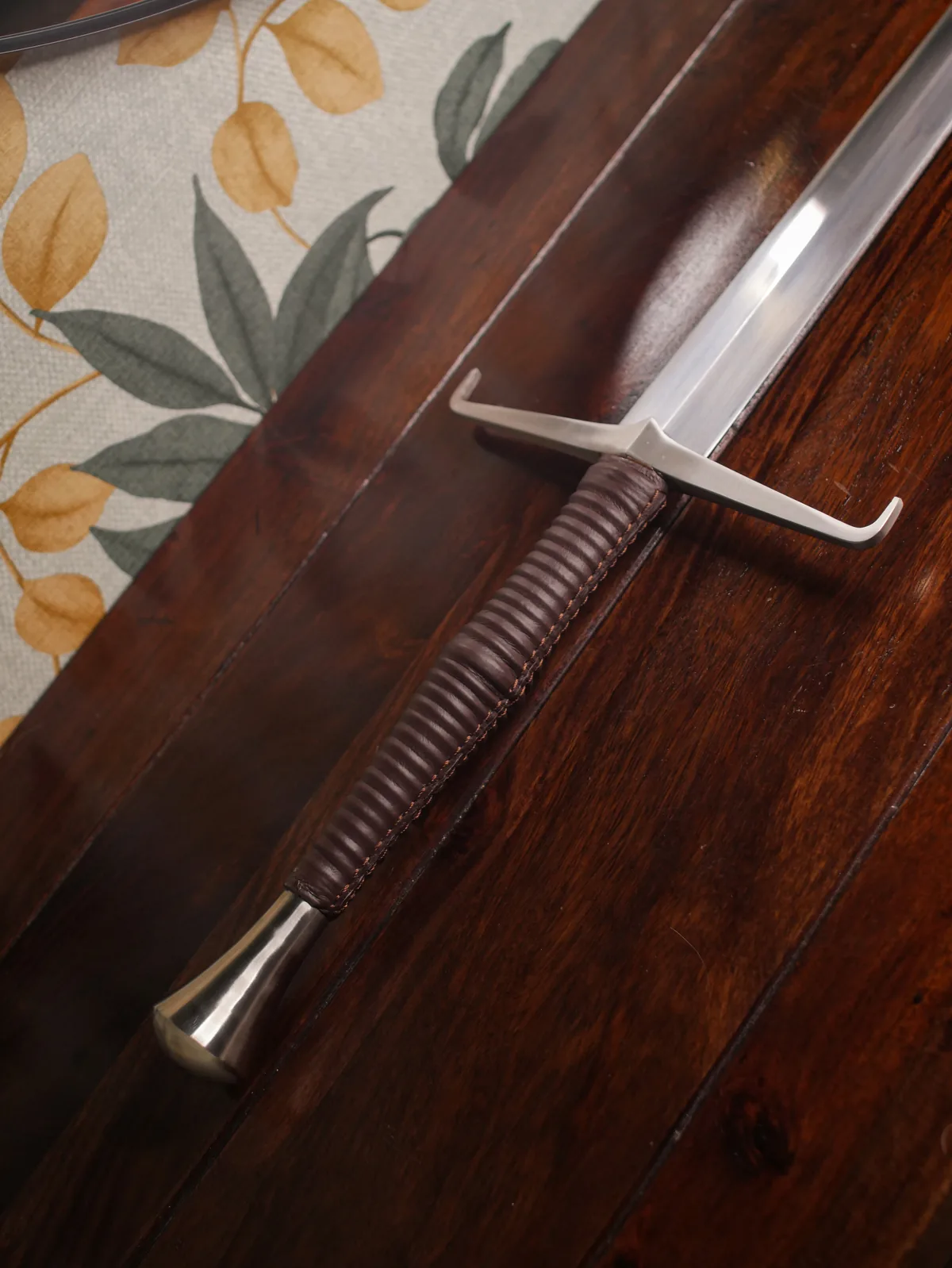
Hand-and-a-half sword, sharp 9260 blade, scabbard included
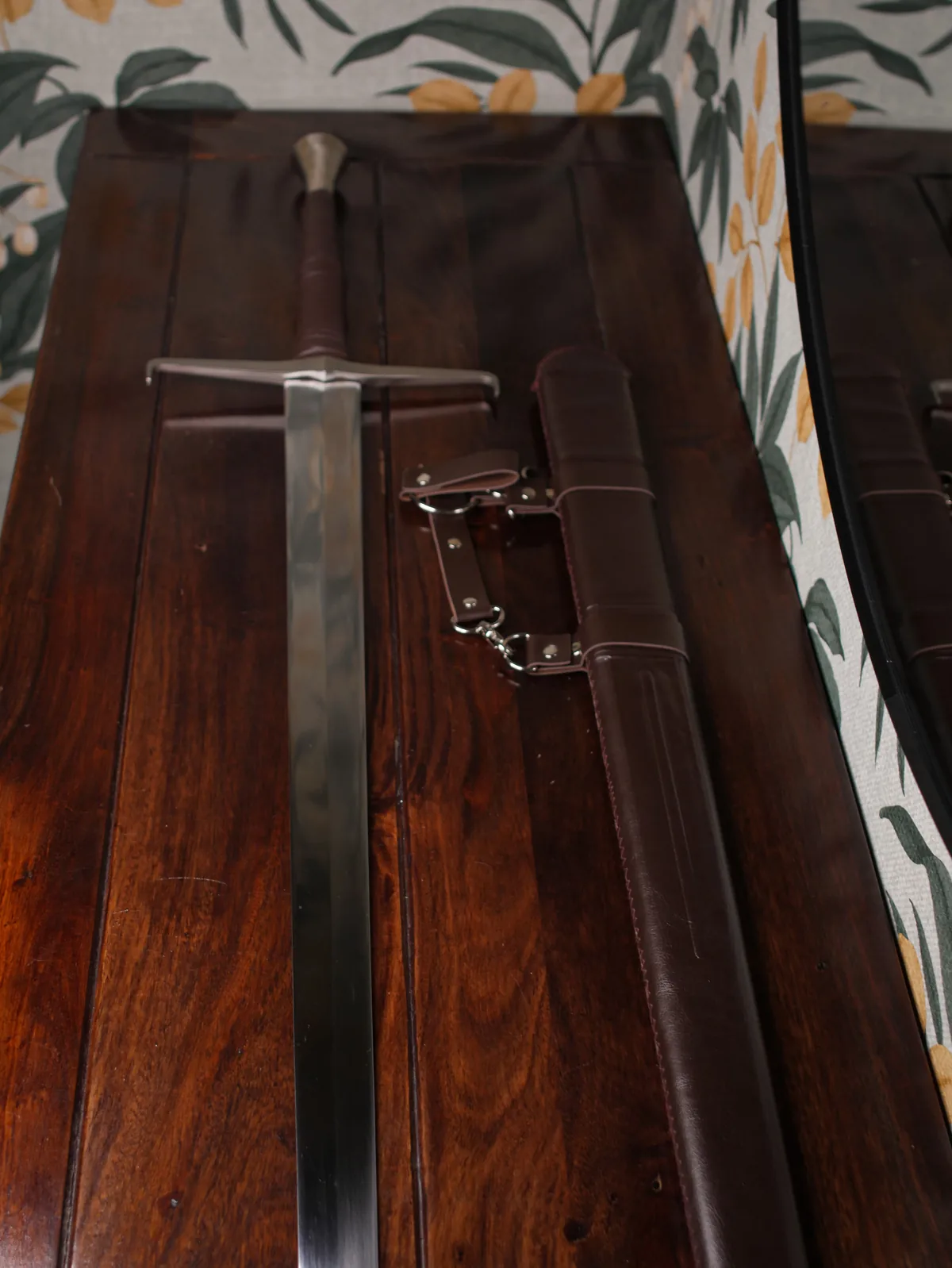
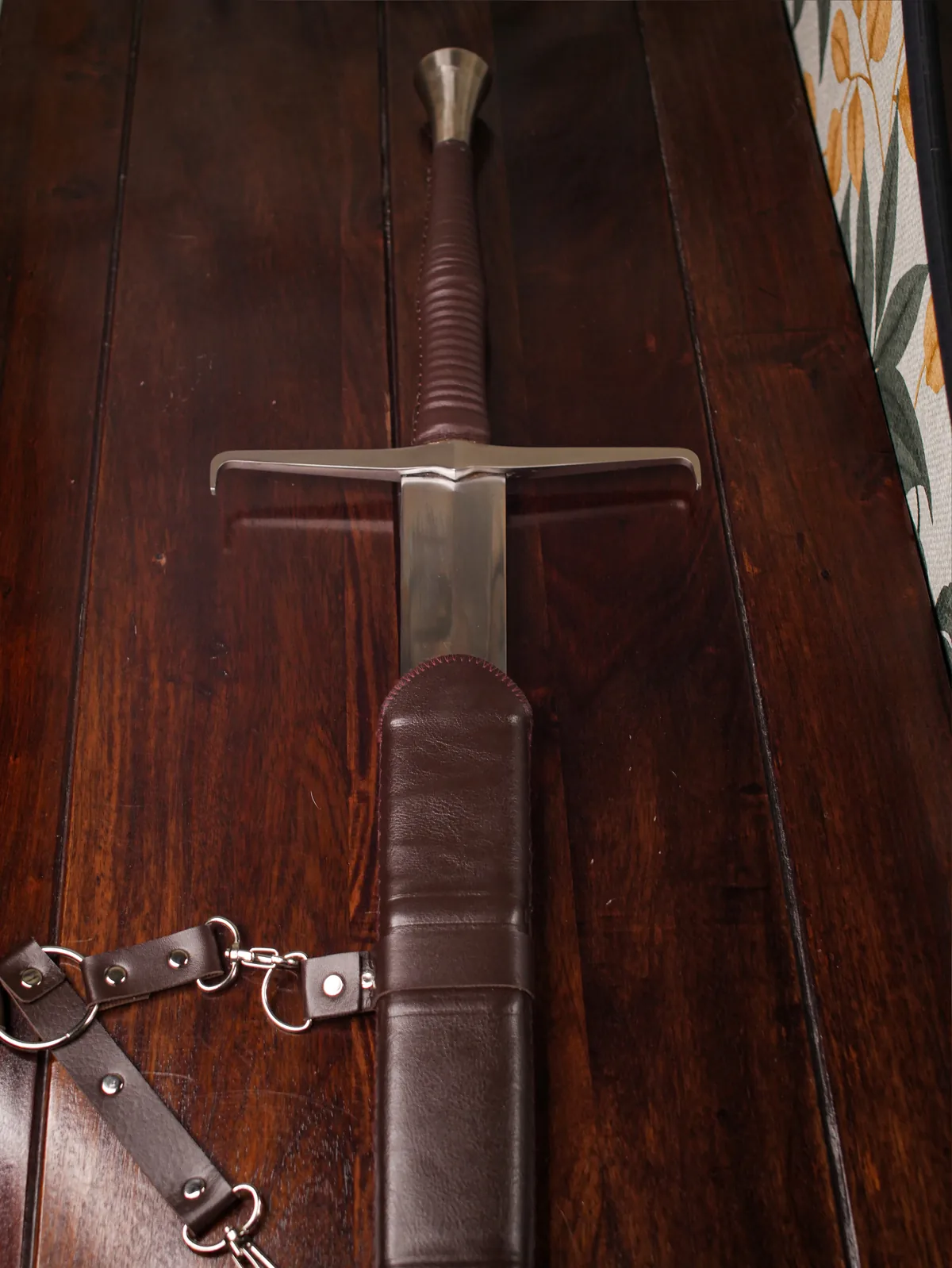
Hand-and-a-half sword, sharp 1060 blade, scabbard included
Hand-and-a-half sword, sharp 1065 blade, scabbard included
Hand-and-a-half sword in 5160 spring steel, scabbard included
Only essential cookies — no ads, no tracking. More