Szczerbiec — the coronation sword of the kings of Poland
Szczerbiec is the coronation sword of the Polish monarchs. It was first used at the coronation of Władysław the Elbow-high in 1320 and went on to serve at the coronations in Wawel Cathedral for centuries. It is the only surviving piece of the old Polish crown jewels.
The sword itself was most likely made in the 12th or 13th century; its hilt is decorated with the symbols of the four Evangelists and with inscriptions. After the partitions of Poland it passed into private hands and then into the Hermitage collection, and came back to Poland in 1928 under the Treaty of Riga. During the Second World War it was evacuated as far as Canada, returned in 1959 and can be seen today in the Crown Treasury at Wawel Castle in Kraków.
The legend of Bolesław the Brave's sword
According to legend, Bolesław the Brave struck the Golden Gate of Kyiv with his sword when he entered the city in 1018 and notched the blade — hence the name Szczerbiec, from the Polish 'szczerba', a notch. It is a fine story but an impossible one: Szczerbiec is centuries younger than Bolesław, and the Golden Gate was most likely built only after his expedition — the Rus' chronicle links it to the year 1037.
The legend simply joined the most famous Polish sword to the most famous campaign of the first Polish king, which is why 'the sword of Bolesław the Brave' and 'Szczerbiec' mean the same thing in everyday Polish.
The two naked swords of Grunwald
On the morning of 15 July 1410, before the Battle of Grunwald, heralds of Grand Master Ulrich von Jungingen rode into the Polish-Lithuanian camp. They brought two unsheathed swords — one for King Władysław Jagiełło, the other for Grand Duke Vytautas — as a challenge to battle. That is how the chronicler Jan Długosz tells it.
Jagiełło accepted the swords, and the battle ended in a crushing defeat for the Teutonic Order. The Grunwald swords were kept in the Wawel treasury but were lost after the partitions. They remain a symbol — two crossed swords appear, for example, on the Cross of Grunwald.
Zawisza the Black
Zawisza the Black of Garbów, of the Sulima coat of arms, is the most famous Polish knight of the Middle Ages and a byword for loyalty — Poles still say 'to rely on someone as on Zawisza'. He fought at Grunwald, rode in tournaments across Europe and died in 1428 at Golubac, fighting the Turks.
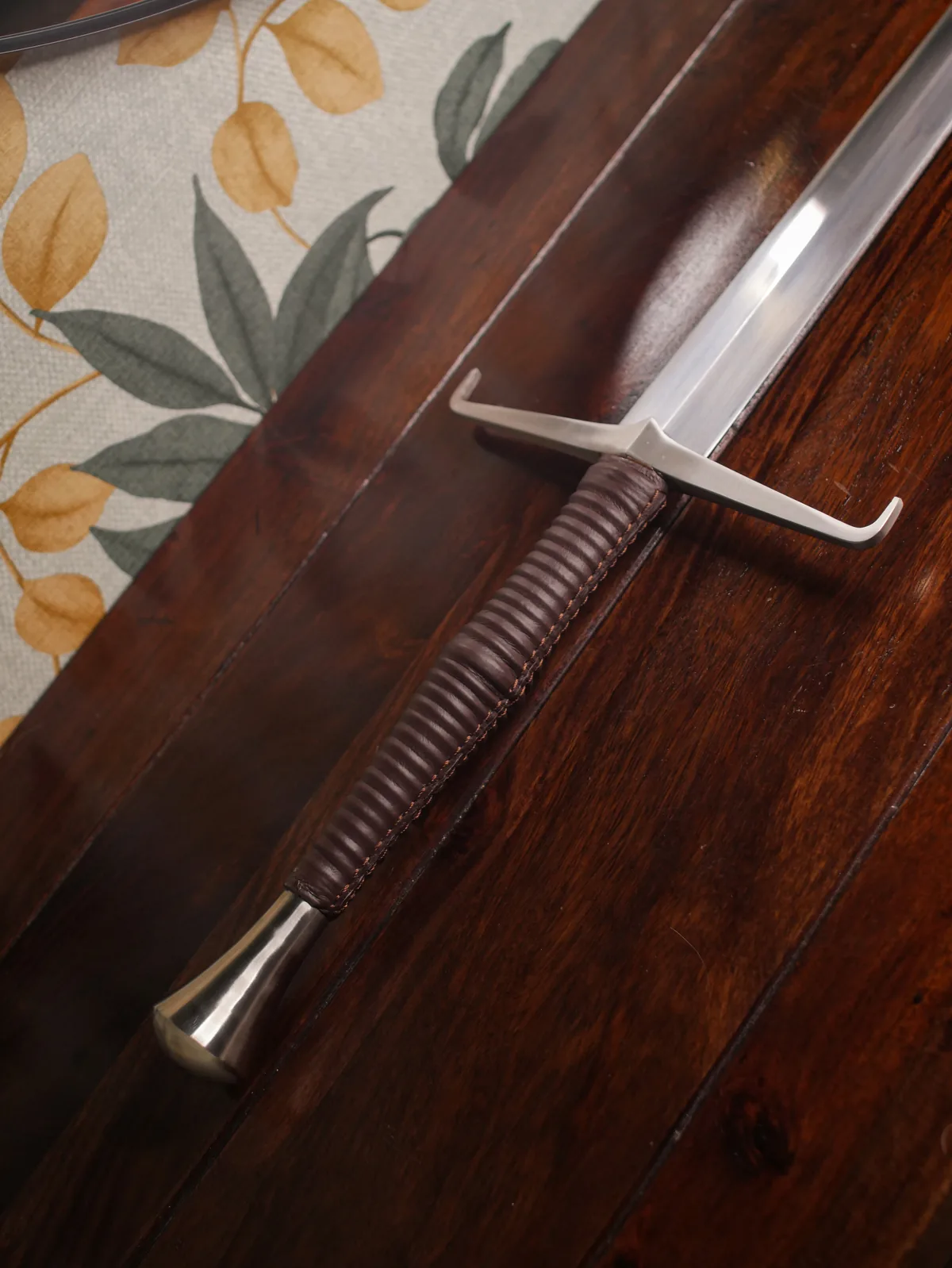
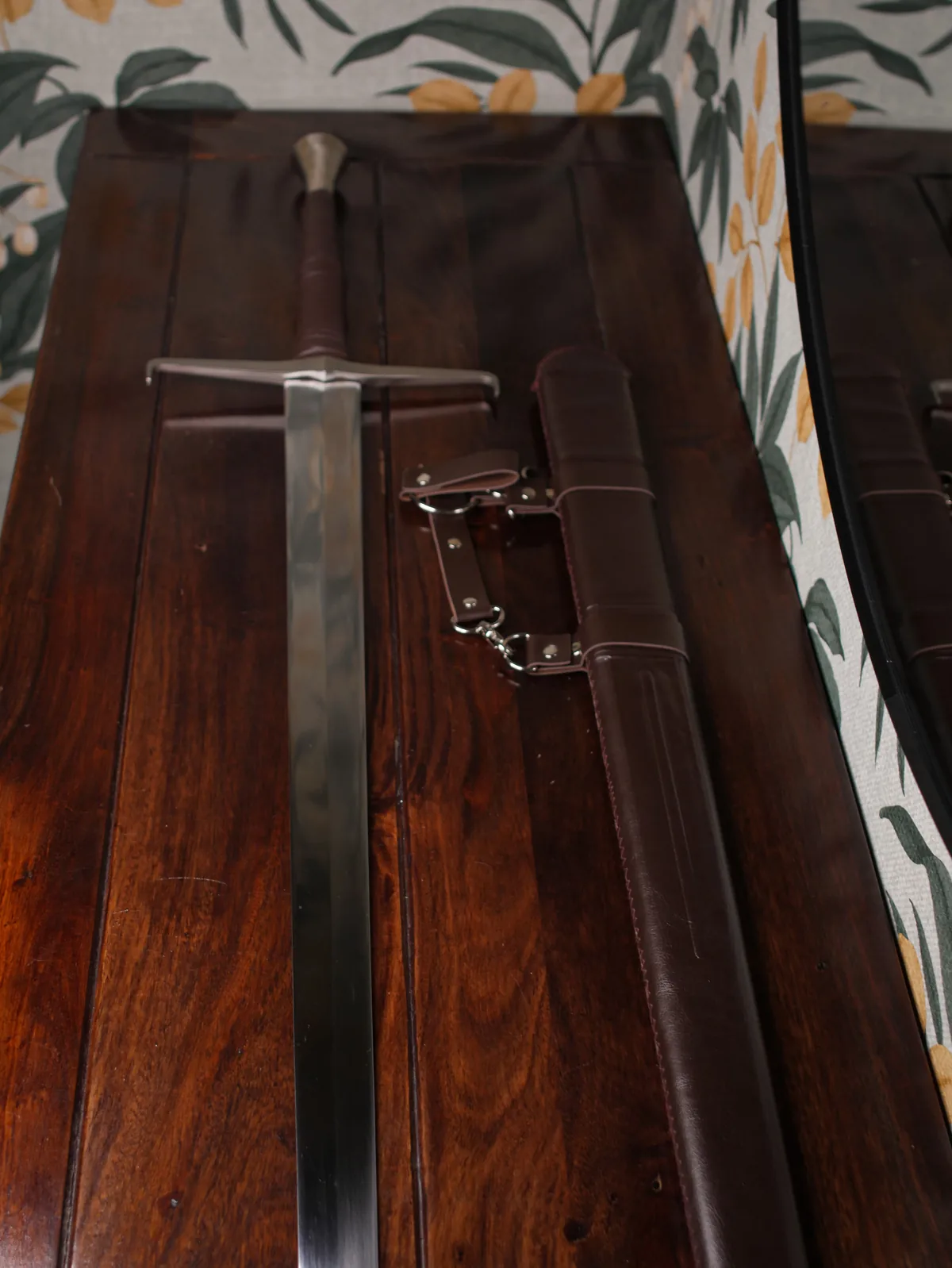
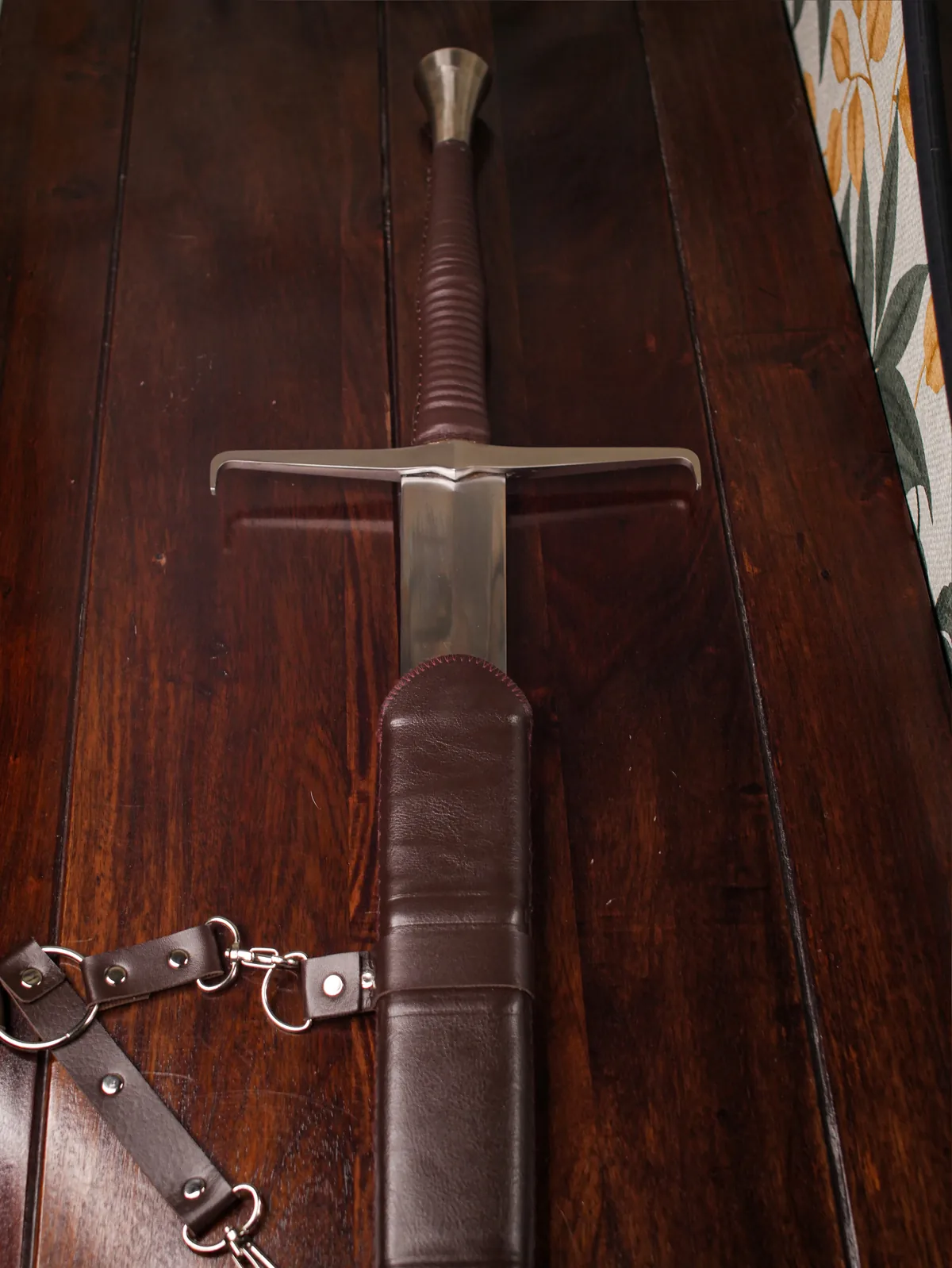
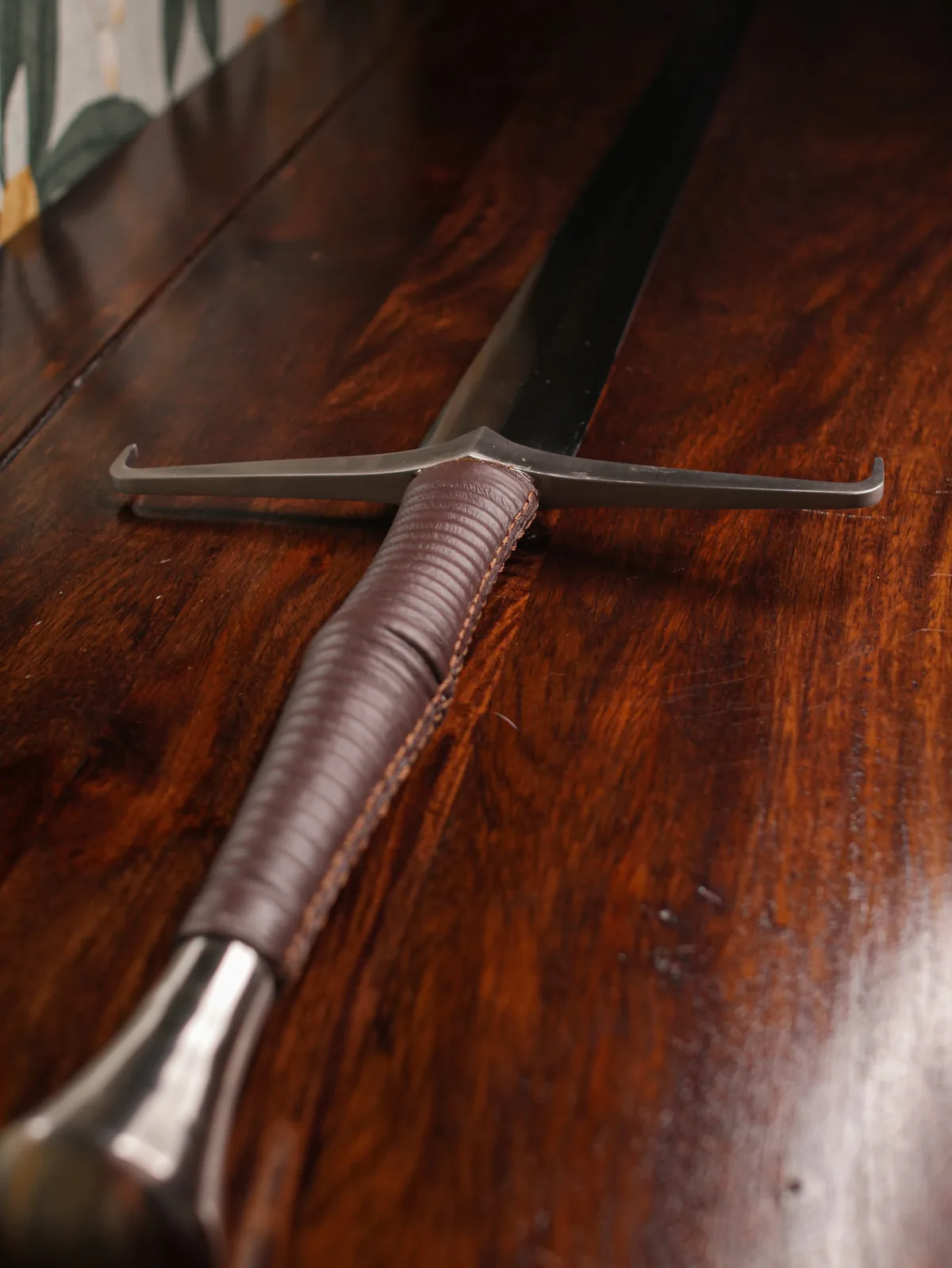
His sword has not survived. One of the swords in our armoury bears his name — a bastard sword in 15th-century style, the age in which Zawisza fought.