The Templars: swords of the 12th and 13th centuries
The Order of the Temple existed from about 1119 to 1312, so a Templar sword is a knightly sword of the 12th and 13th centuries: one-handed, double-edged, with a cross guard and a disc or brazil-nut pommel. In Oakeshott's typology these are mostly types X to XIII — a broad blade, a long fuller and a weight of 1.0–1.4 kg.
A Templar fought with sword and kite shield, mounted and on foot. The Rule of the order favoured simplicity and forbade gold and silver on bridles and spurs — a Templar's sword was a tool, not a jewel.
Why the cross on the sword
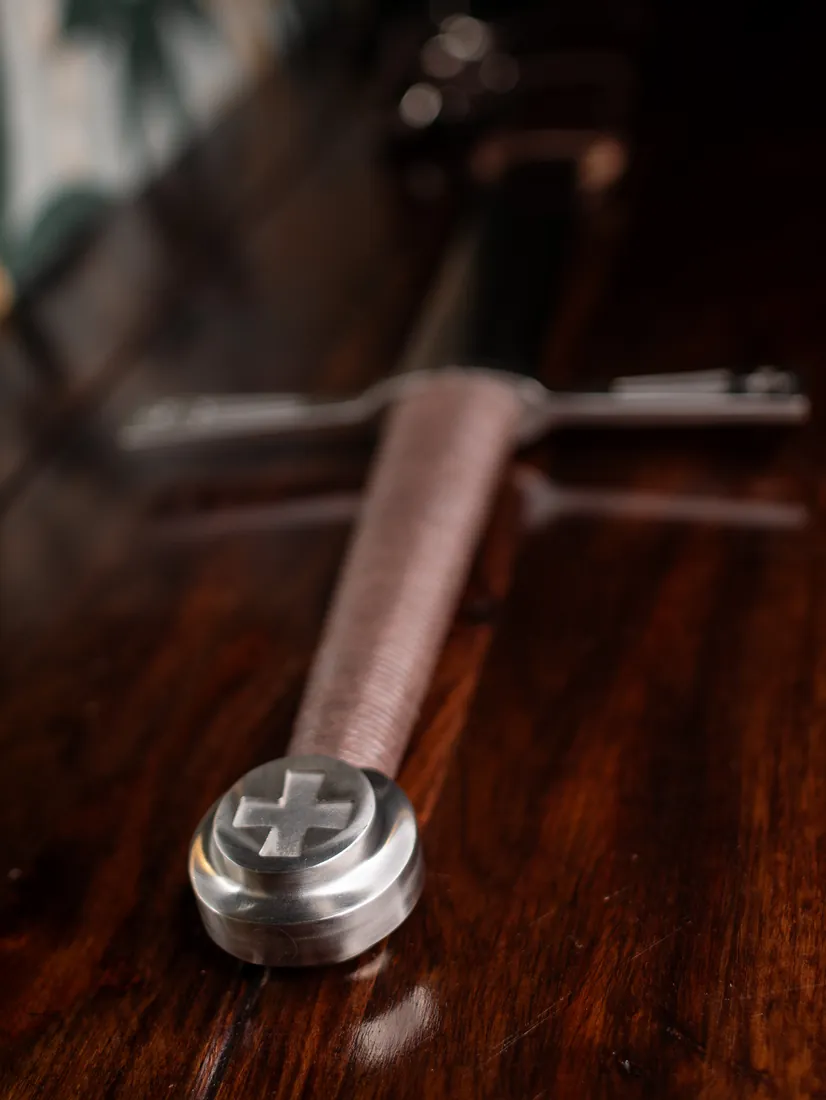
A sword with a cross guard is itself shaped like a cross, and pommels and blades of the period sometimes carry engraved crosses and pious inscriptions. The red crosses on pommels and enamelled shields on today's 'Templar sword' replicas, however, are modern styling, not copies of a particular surviving sword.
The Teutonic Knights: swords of the 14th and 15th centuries
The Order of Brothers of the German House of Saint Mary in Jerusalem — the Teutonic Knights — settled in Prussia in the 13th century. At Grunwald in 1410 its knights fought with the swords of their age: one-handed swords and longswords, ever slimmer and more tapered, because the enemy now wore plate armour that had to be beaten with a thrust into a gap.
A Teutonic Knight's sword therefore usually weighed 1.1–1.6 kg. The great two-handed swords often associated with the military orders became widespread only in the 16th century, long after Grunwald.
Baldwin — our interpretation
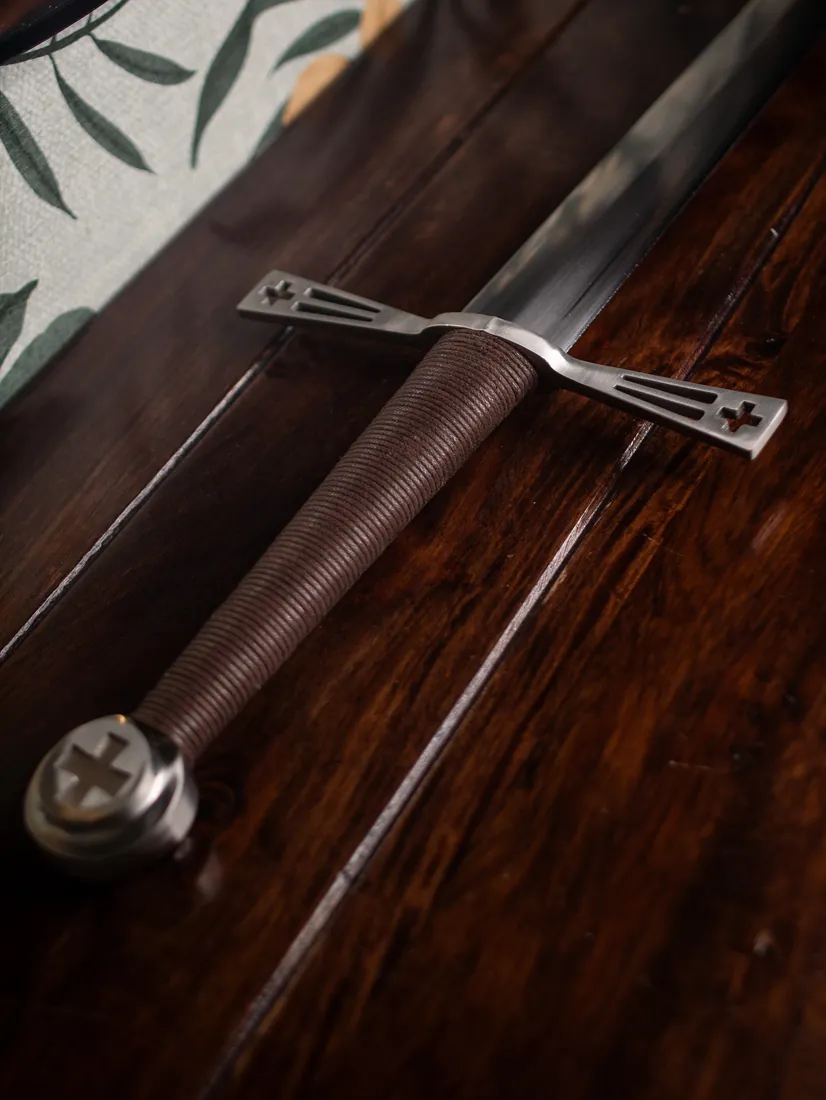
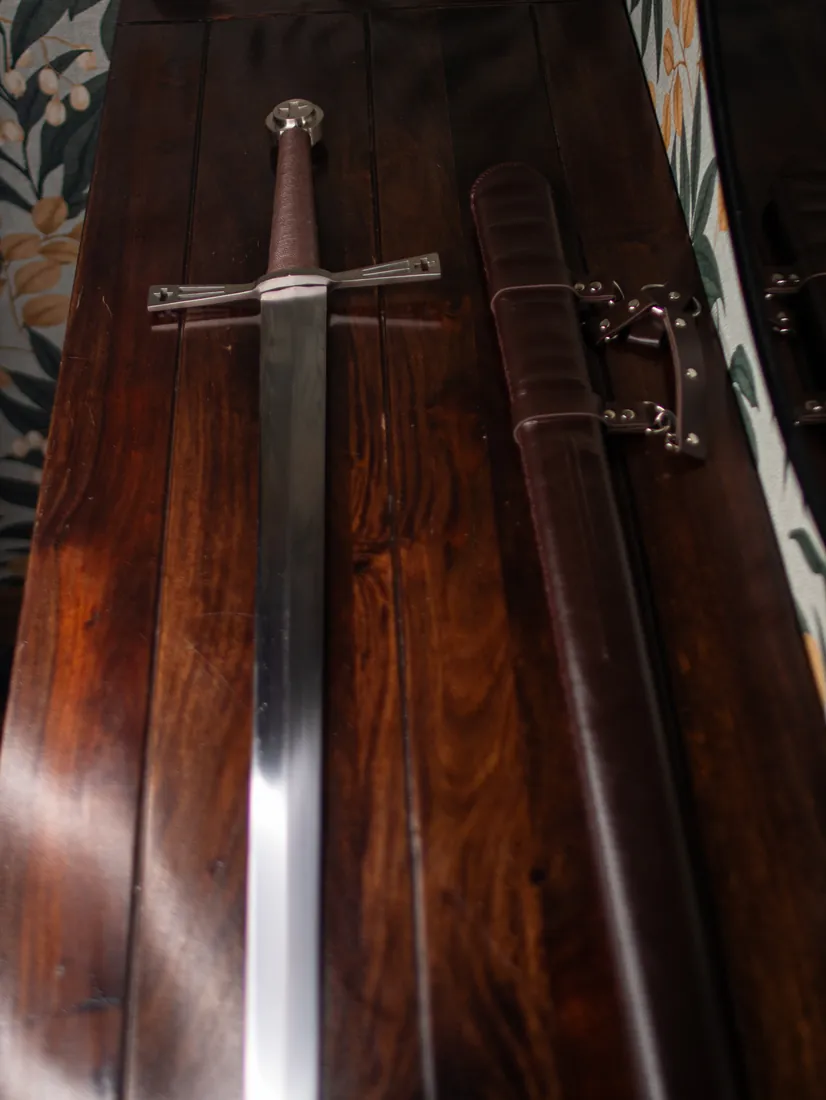
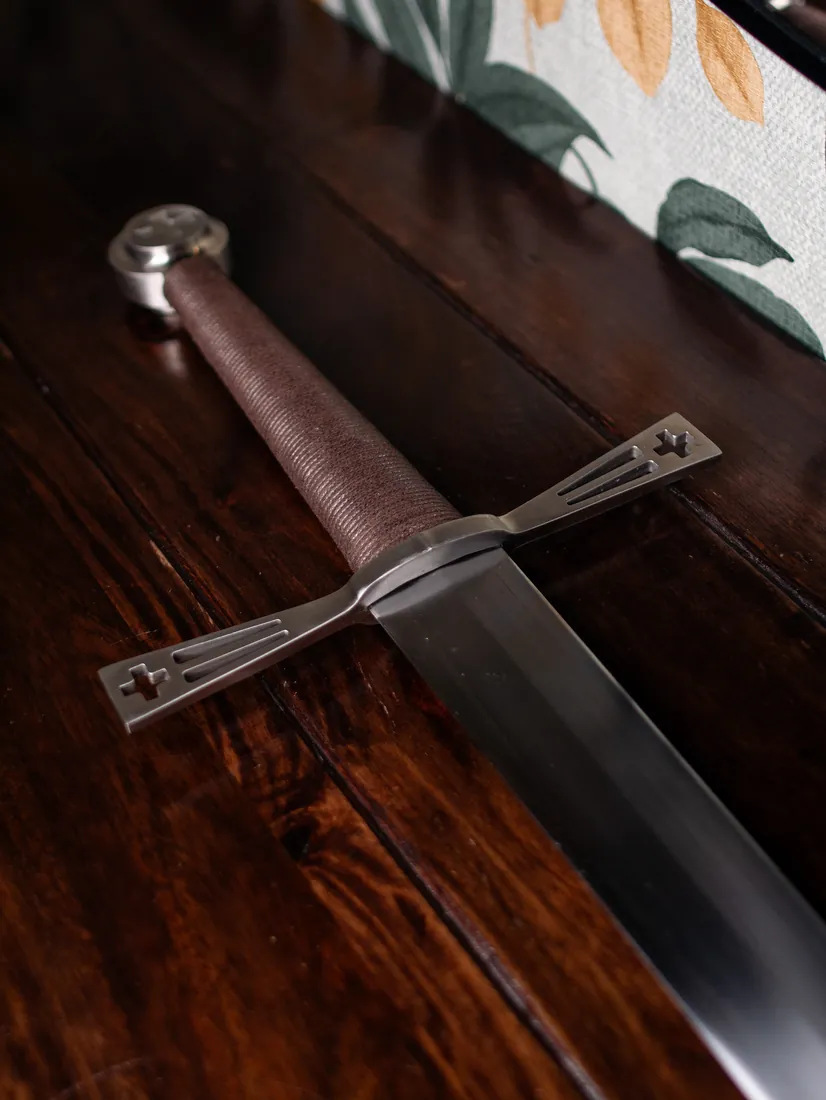
Our armoury has the Templar Longsword 'Baldwin'. To be honest about it: it is a modern take on the order's style — a guard and pommel with a cross motif — on a longsword, while the historical Templars carried mainly one-handed swords. The steel, the heat treatment and the construction, however, are those of a real weapon.